
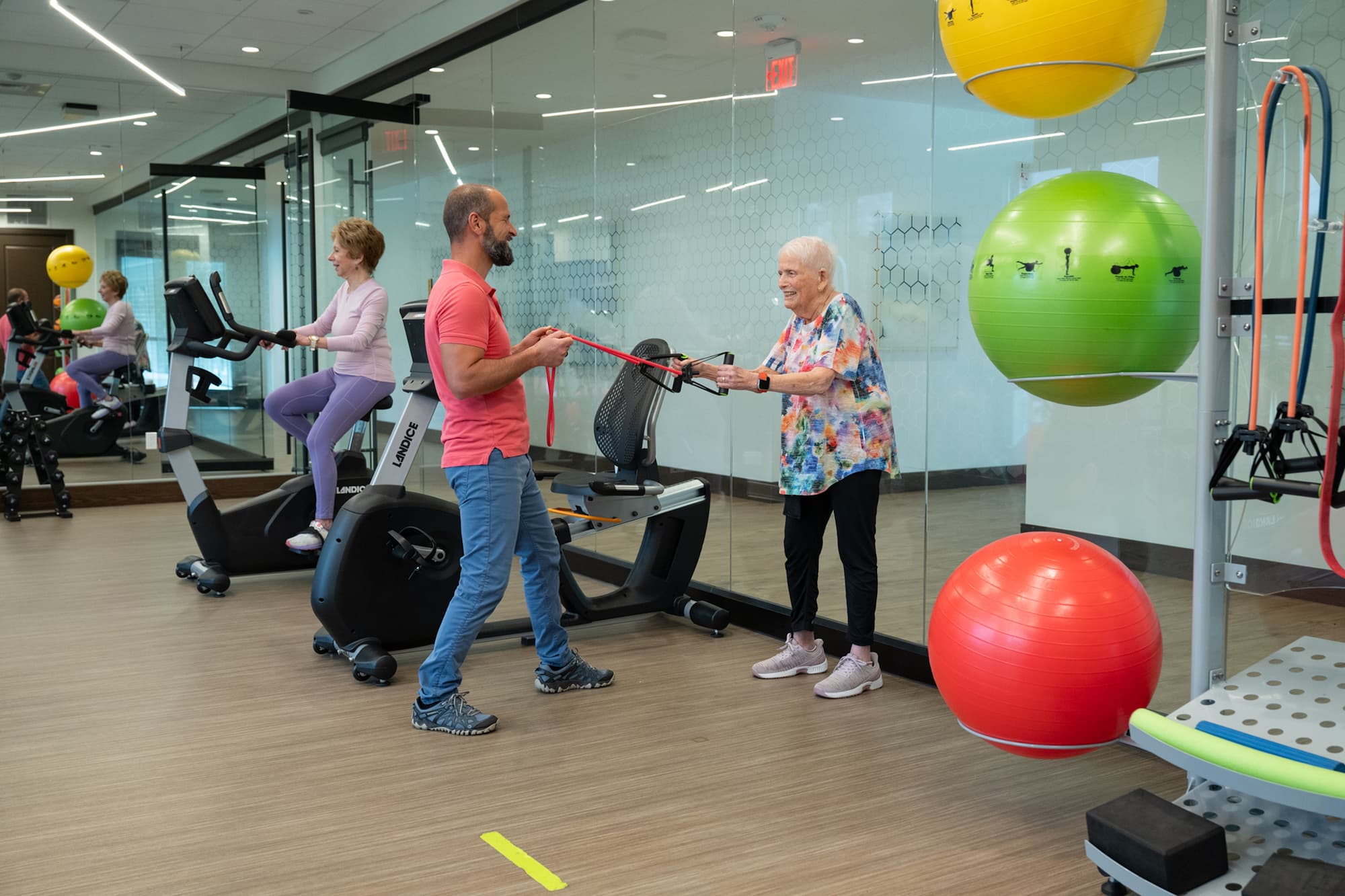
The benefits of maintaining an active lifestyle as we age is no secret — and movement is key. Walking, gardening, dancing (!), swimming or working out in a gym can contribute to a healthy heart, improved balance and even a positive mental outlook. But did you know working your body regularly, ensuring strong muscles, can help improve your cognitive health as well?
That’s right, building your muscles positively impacts your noggin!
First Up: Brain Basics and Cognitive Connections
Your brain is one of the most complex systems in your body. It’s made up of a massive network of neurons that send signals to control thinking, memory and emotion. Each area of the brain specializes in the control and health of a specific function. Two important parts of the brain are:
The hippocampus, which is situated deep inside your skull. It is vital for learning and consolidating information, including short-and long-term memory, and spatial navigation.
The prefrontal cortex handles what scientists call “executive function.” Think: planning, decision-making, risk assessment and impulse control. This part of the brain is often not fully developed until we’re in our mid-20s.
A natural part of aging is a gradual volume loss in the brain. This slight shrinking can affect the hippocampus and prefrontal cortex. Reduced blood flow to and in the brain, as well as less effective communication between those neurons we talked about, are other age-related effects of aging in the brain.
Don’t despair though. We have good news, too!
- Aging brings positive changes to the brain. That greater mastery and understanding of vocabulary you possess tends to win out over that of younger folks.
- There are things you can do to keep or improve cognitive function, memory and overall brain health.
Benefits of Exercise on the Brain
Physical activity is one of the best ways to increase blood flow to parts of the body. So, it makes sense that if your brain’s blood flow decreases as you age, getting your body moving, your heart pumping and your muscles working will help boost that flow to your brain. This, in turn, delivers more oxygen and nutrients, which helps brain cells function better.
Exercise also stimulates the production of two important brain boosters: a protein called BDNF (brain-derived neurotrophic factor) and a hormone called irisin. Together, these powerhouses promote maintenance of a healthy, active, well-functioning brain. How? They help grow new brain connections and protect healthy brain cells. BDNF is even referred to by scientists as “fertilizer” for the brain.
A study in Proceedings of the National Academy of Sciences found that moderate-intensity aerobic exercise increased the volume of the hippocampus, a key brain region for memory, by 1% to 2% in older adults, essentially reversing age-related shrinkage. In other words, it’s never too late to use exercise as a tool to improve brain function.
What Are the Best Exercises for Brain Health?
Along with aerobic exercise to raise your heart rate, maintaining muscle mass and strength, particularly handgrip strength, have been shown to improve brain health and even lessen or prevent dementia-related memory loss.
According to a nationwide study by the Journal of Psychiatric Research and highlighted by ScienceDirect, muscle strength acts as a marker for brain health and cognitive function, especially in seniors.
Does this mean you or your senior loved one should start benching heavy weights? Absolutely not. What it does mean is that, after speaking with your healthcare provider, you can start incorporating simple, weight-bearing exercises into your day. Such exercise can include:
- Walking
- Climbing stairs
- Sit-to-stands from a chair
- Tai chi
- Yoga
- Calf raises, while holding onto a chair or railing
- Dancing
- Gardening
Boosting Hand Strength for Better Brain Function
If you’re looking to take advantage of the benefits of increased hand strength, try a few easy at-home exercises from WebMD.
You can also access your inner-child, grab a tub of Play-Doh® and try the following hand workouts:
Squeezing. Using one hand at a time, pull the dough from the container and form it into the tightest ball you can. Place the ball on a table, flatten the dough. Then, peel it up and push it back into the container. Do all of this with one hand. Then switch to the other.
Kneading. Using one hand at a time, pull the dough from the container and push and pat it into a flat circle on a table. Using one hand still, place your open hand on the dough, flex your fingers out toward the edges of the circle and, bending your fingers repeatedly, gather the edges of the dough toward your palm. Once you have the dough in a pile under your palm, pick it up, push it back into the container and switch hands.
Food Choices That Help Your Brain
What are the best foods for muscle growth and brain function? Most of them are high in protein, healthy fats and complex carbs, all which provide important nutrients for building and repairing tissue in the body. Here’s a basic list from Healthline to get you started. Many of these may already be in your fridge or pantry. And they’re definitely on the menu at The 501’s beautifully appointed, chef-run dining rooms!
- Eggs
- Salmon
- Chicken breast
- Greek yogurt
- Tuna
- Lean beef
- Cottage cheese
- Beans
- Chickpeas
Healthy Habits for Healthy Cognition
When considering how to improve cognitive function, exercise and diet are not the only lifestyle choices that can make a difference. Other daily habits that support a healthy brain and emotional wellness include:
Sleep. Seven to nine hours of consistent, high-quality sleep is crucial to feeling good.
Sunlight. Regular sunlight exposure, even for 10-20 minutes a day, increases BDNF. (Remember BDNF? That brain-healthy protein.)
Stress management. Yoga, meditation, intentional breathing exercises and mindfulness lower inflammation, which in turn helps keep BDNF levels high.
Cognitive activity. Lifelong learning programs like those offered at The 501 are great ways to keep your mind working. Lectures, art classes, financial seminars and tech Q&As are all within easy reach at our senior living community.
Social interaction. Maintaining connections to others through conversation, dining with neighbors, playing games and enjoying a movie together are all great ways to keep your brain active and your memory sharp.
Living in community with other active seniors is a great way to stay plugged in socially, intellectually and even physically. Life at The 501 at Mattison Estate can check all those boxes and more. If you’d like to learn more about Independent Living, Assisted Living or Memory Care, get in touch today.